

Inside almost every metal assembly, there is a category of part that rarely gets mentioned in marketing brochures yet quietly decides whether the whole product holds together: the pin. A precision pin locates components, pivots moving joints, transmits light torque through a shaft, and keeps everything where the designer intended. When a pin is slightly oversized, undersized, or out of round, the result is a seized hinge, a loose fit, a rattle that develops after a few months in the field, or a costly warranty claim. For buyers and mechanical engineers, sourcing precision pins is therefore not a commodity exercise. It is a tolerancing, materials, and heat-treatment decision wrapped inside a procurement process. This guide walks through what precision pins are, the main types you will encounter, how materials and surface finishes change performance, how they are made and inspected, and what to specify on your drawing so a custom manufacturer delivers the first batch that fits.
What Are Precision Pins?
A precision pin is a cylindrical or profiled mechanical fastener manufactured to close dimensional tolerances, used to align, support, pivot, or join two or more components. Unlike a common dowel bought off the shelf, a true precision pin is turned, ground, and often heat-treated so its diameter, roundness, surface finish, and straightness are controlled to levels that a standard commercial part cannot guarantee. The difference shows up in repeated assembly: a pin that locates a bracket on agricultural equipment may be installed and removed hundreds of times over its life, and the fit must remain consistent.
In practice, the term covers a family of parts rather than a single geometry. Some pins are designed to be pressed in and never moved; others are built to rotate freely in a housing; still others carry load as a miniature shaft. The buyer's first job is to decide which mechanical role the pin plays, because that choice drives material, tolerance, and finish.
Common Types of Precision Pins
Although every application is slightly different, most precision pins fall into a handful of standard shapes. Matching the shape to the joint function is the quickest way to avoid over- or under-engineering.
Cylindrical / dowel pins. The straight, unheaded pin. Its job is location: it aligns two mating parts so bolts or screws can then be torqued without shifting the interface. These are commonly used in jigs, molds, and machine frames. You can see our standard offering in the cylindrical pins range, where the emphasis is on consistent diameter and roundness along the full length.
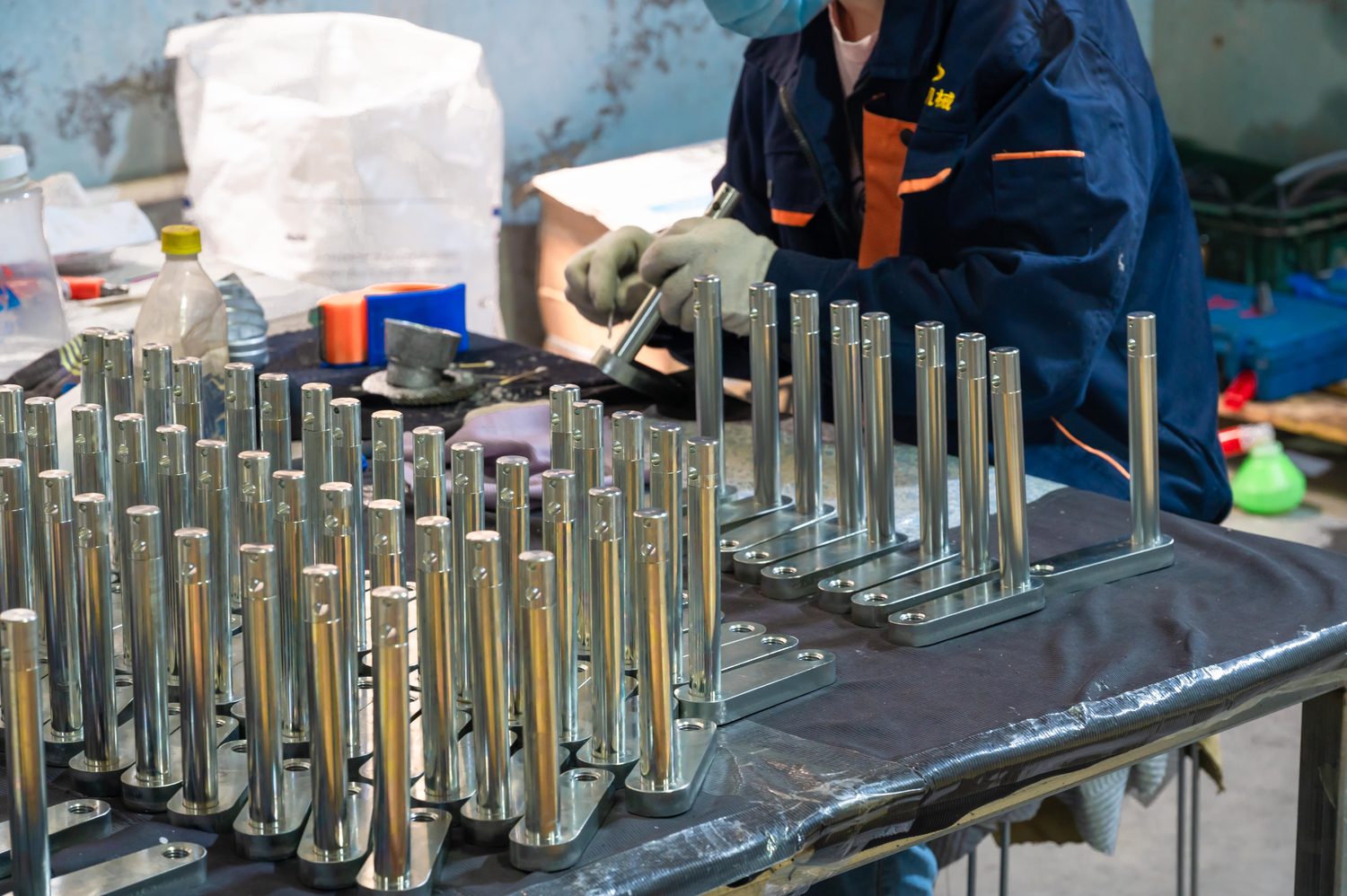
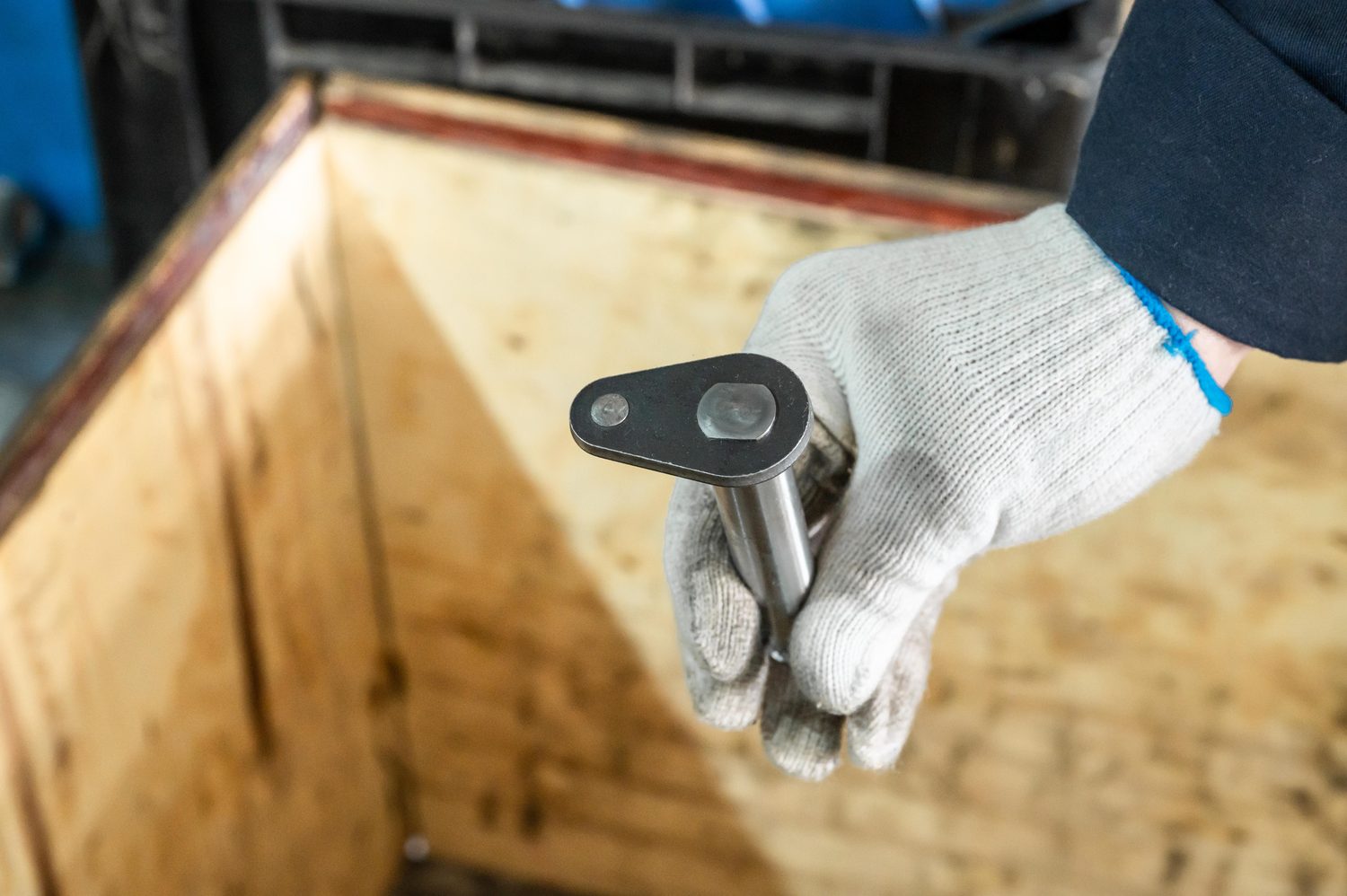
Locating / positioning pins. Often slightly more elaborate than a plain dowel, these pins carry a shoulder, a step, or a pull feature to position a part at a controlled height and to be extracted during maintenance. They are typical in tooling, fixture plates, and automated equipment where repeatable location of the workpiece matters. Our locating pins are built around this shoulder-and-stop logic.
Tapered / conical pins. A taper allows the same pin to compensate for a small amount of wear in the reamed hole and to be driven out from the back. They are favored in joints that see repeated disassembly and where a straight pin would gradually loosen.
Swivel / clevis pins. These pins pass through a clevis or yoke and pivot, usually retained by a groove and a circlip or by a cross-hole for a cotter. Load is shear, and the surface is expected to wear gracefully rather than seize. Edge condition and hardness in the shear zone matter more than extreme diameter accuracy.
Flange pins. A small integrated flange at one end acts as a built-in stop and load spreader, removing the need for a separate washer and keeping the mating surface from being scored under thrust load.
Drive shaft pins. At the larger end of the family, a precision pin doubles as a miniature shaft: it may be turned between centers, ground to a bearing fit, and supported by a bushing or rolling element. These blur the line between a pin and a shaft, and they are part of our broader pin shaft category.
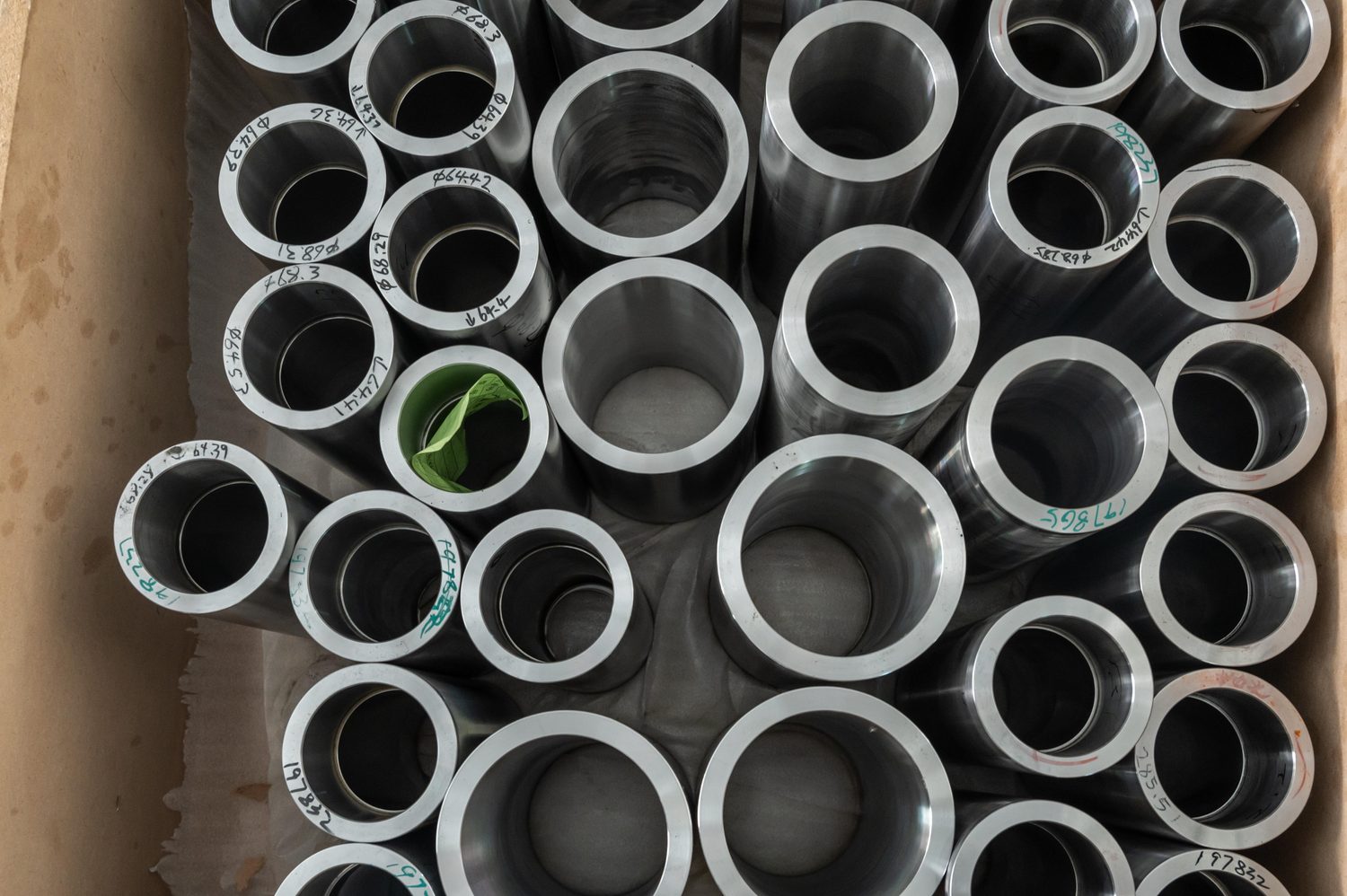
Pins rarely work in isolation. A pivoting pin almost always rides inside a bushing, and the wear life of the pair is decided by the match between the two rather than by either part alone. The companion sleeve that supports the pin deserves the same tolerance thinking as the pin itself; our precision bushings are produced on the same lines to keep that fit consistent.
Materials and Heat Treatment
Material selection for pins is mostly a trade between hardness, toughness, corrosion resistance, and cost. Three groups dominate the market.
Carbon steel is the default choice for dowel and locating pins that live indoors. It machines cleanly, responds well to through-hardening or case-hardening, and is economical. The trade-off is rust, so carbon steel pins almost always leave the factory with a protective finish.
Alloy steel is specified when the pin must carry higher shear or fatigue load and survive impact without snapping. The alloying elements allow deeper and more uniform hardening, which matters on larger-diameter pins and on parts that see repeated cycling.
Stainless steel is the answer when the pin is exposed to moisture, washdown, or outdoor environments such as agricultural and construction equipment operating in the field. It sacrifices some hardness potential for corrosion resistance.
Heat treatment is where a pin earns the word "precision." Through-hardening raises bulk hardness so the pin resists indentation and wear; case-hardening produces a hard, wear-resistant shell over a tougher core that will not be brittle under shock. The exact hardness value and case depth are, in our practice, defined by the customer's drawing rather than applied as a universal default. If the joint sees abrasive dust, a harder case helps; if it sees shock loads, a tougher core is the safer specification. Agreeing on the hardness and the test method on the drawing is far better than arguing about it on rejected samples.
Surface Treatment
Surface treatment on a pin does more than change its color. It controls corrosion, reduces galling during installation, and sometimes adds a light lubricity layer. Three finishes cover most of the work we ship.
Zinc plating is the standard protective finish for carbon and alloy steel pins. It provides a sacrificial corrosion barrier and a recognizable silver or iridescent appearance. It is the right default for pins shipped to Europe and North American machine builders, where long ocean transit and warehouse storage are normal.
Black oxide gives a matte black finish with only a thin conversion coating. It adds minimal dimensional change, which is important on a pin already ground to a tight fit, and it is typically sealed with oil. Buyers choose it when appearance matters and when they want essentially no build-up on the diameter.
Nickel plating offers a brighter, more decorative finish and better corrosion resistance than zinc in mild environments. It is common on pins used in valve hardware, electrical fittings, and consumer-facing machinery.
The practical point for sourcing: ask the supplier whether the finish is applied after grinding and whether the added coating thickness will push a precision fit out of tolerance. On close-clearance pins, the plating thickness has to be budgeted into the drawing, otherwise a part that measured perfectly before plating becomes an interference fit after plating.
How Precision Pins Are Made
The production route for a precision pin follows a sequence that a buyer can use to sanity-check any quote.
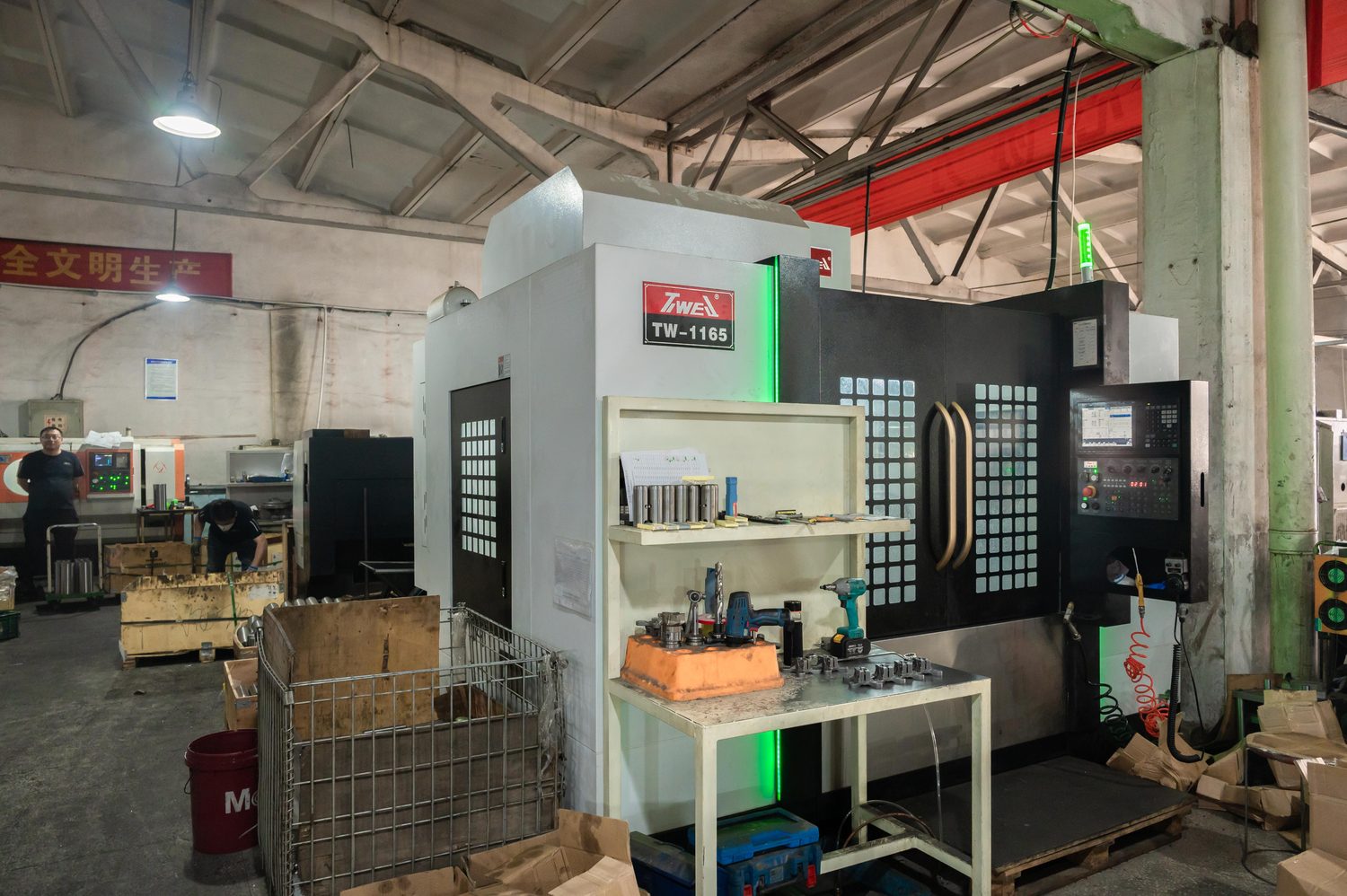
CNC turning is the first shaping step. Bar stock is chucked on a precision CNC lathe and the blank is turned to near-final diameter, with shoulders, grooves, chamfers, and head forms cut in the same setup. With around 40 CNC machines across our two standard workshops in Jimo, Qingdao, this is the step where geometry and dimensional consistency are locked in. The company, Qingdao Jinglitong, was established in July 2014 and has grown to about 85 employees and a 50-acre facility, shipping pins and shafts to customers in Europe and the United States.
Grinding follows turning when the fit demands it. Precision centerless and cylindrical grinding removes the small remaining stock and brings the diameter, roundness, and surface finish up to the levels a press-fit or rotating bearing fit requires. Grinding is also the step that corrects any distortion introduced by heat treatment.
Plating or surface treatment is then applied as specified, with the coating thickness accounted for on the drawing.
Inspection is the final gate before packaging. It is not an afterthought; it is the step that turns a batch of turned parts into a deliverable product.
Tolerances and Inspection
The most common sourcing mistake is specifying a tolerance that is tighter than the application needs, or looser than the joint actually requires. There is no single correct number: a locating pin pressed into a housing wants a controlled interference, a pivoting pin wants a small running clearance, and a clevis pin that slides through a hole wants room to move. The correct tolerance is the one derived from the joint's function and confirmed on the drawing. When in doubt, describe the fit rather than asserting a decimal, and let the manufacturer propose a band consistent with how the part will be assembled.
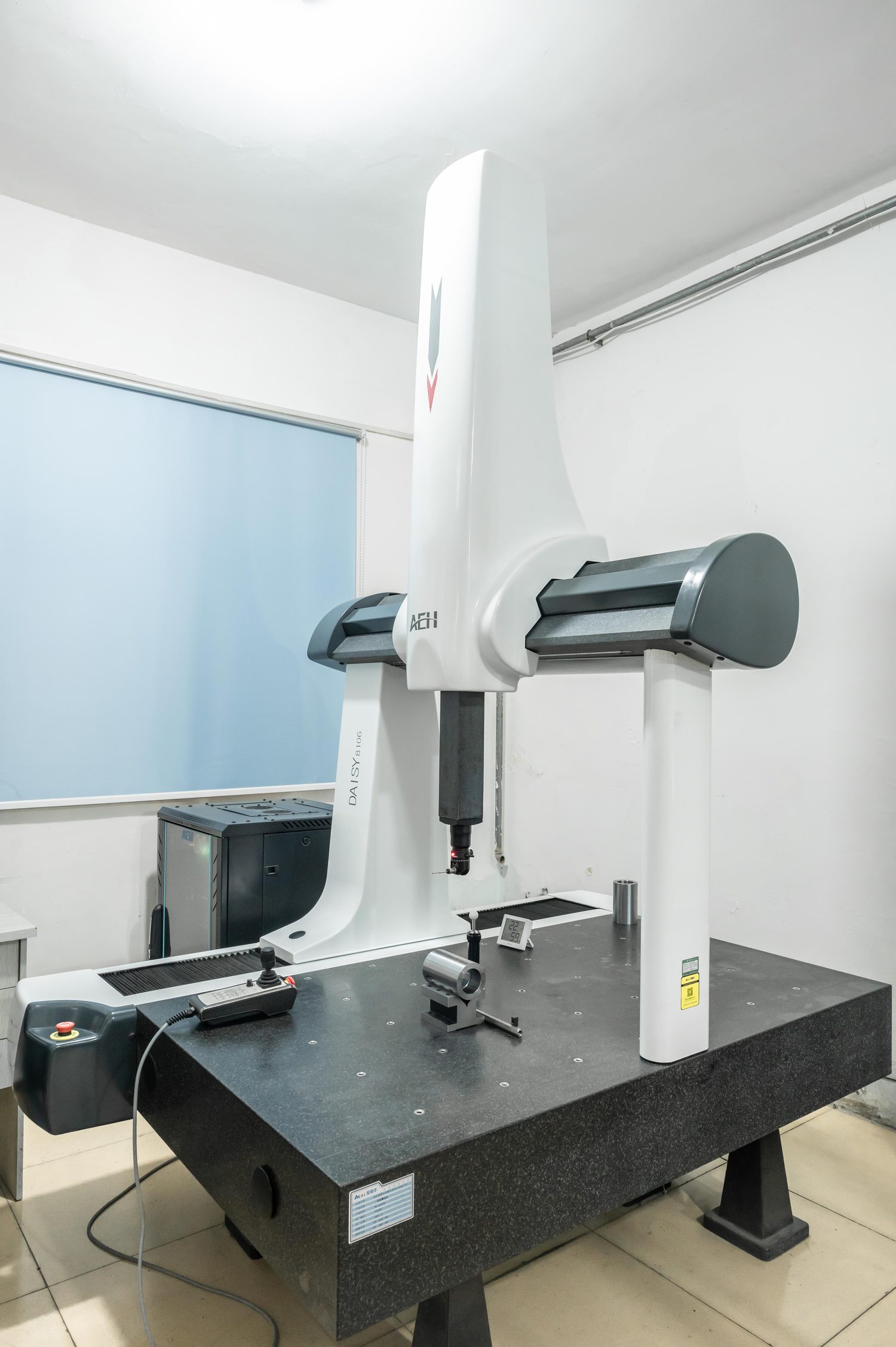
On the measurement side, two tools carry most of the credibility. A coordinate measuring machine (CMM) verifies diameters, positions, and geometric relationships against the CAD data, which is essential when a pin carries multiple shoulders or must align with multiple holes. Hardness testing confirms that heat treatment actually delivered the specified condition, catching the difference between a batch that looks right and a batch that will hold up in service. We run both as standard checks, along with visual and dimensional sampling before packaging.
A Practical Selection Guide
When you are putting a pin requirement out to quotation, answering four questions on the drawing saves two rounds of samples:
- Function: Is the pin locating, pivoting, shearing, or driving? This decides the shape and the fit.
- Load and environment: Static or cycling? Indoor, outdoor, or washdown? This decides carbon, alloy, or stainless, plus the finish.
- Fit: Press, transition, or running clearance? Describe the mating hole and the assembly method rather than only the pin diameter.
- Quantity: A prototype batch tolerates a flexible process; a long-run production order rewards a fixture and inspection routine tuned to the part.
It also helps to know where the pin will live in the field. The pins we manufacture support customers in agricultural machinery, engineering machinery, ships, trains, valves, electricity, petroleum, and chemical equipment, and the tolerances and finishes typical of those industries differ. A pin for a valve sees steady axial load and corrosion; a pin for an agricultural implement sees shock, dust, and mud. Specify the application, not just the drawing.
Need Custom Precision Pins Manufactured?
Every pin above starts as a drawing and ends as a part that fits the first time. If your project needs custom precision pins in carbon, alloy, or stainless steel with the heat treatment and surface finish matched to the joint, send the drawing and the expected annual volume. We will confirm the fit, propose the process route, and return samples before mass production. The company holds AAA-grade enterprise credit ratings (BCC, per GB/T 23794-2023), and our 58 machines across two workshops are set up for exactly this kind of turned and ground work.
Tell us what the pin does, how it is assembled, and the environment it operates in, and we will quote a realistic process rather than a generic number. Contact us with your drawing for a custom precision pins proposal.
