
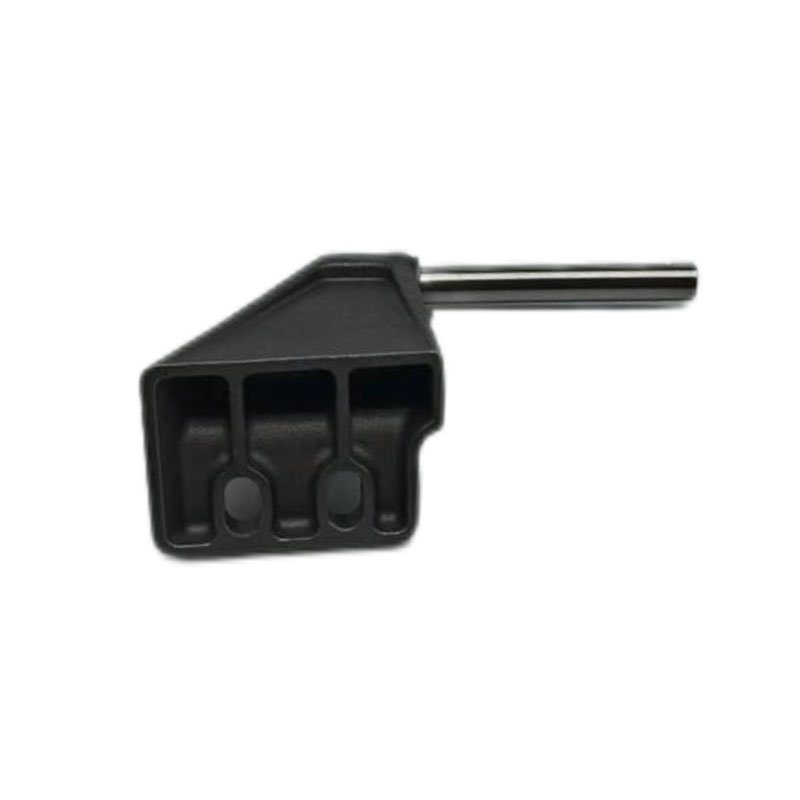

Model: JL-019
Name: Bushing E
Material: Carbon steel
Product Overview
A machine bushing earns its keep the day a shaft finally wears the hole it runs in. The JL-019 is pressed into that bore first, so the wear lands on the sleeve instead of the housing casting — and when the sleeve gives up, the maintenance team swaps a small part rather than repairing a large one. It is the cheapest insurance a rotating joint can buy, and it fits wherever a shaft, pin or lever works inside a machined housing.
Built from carbon steel as recorded on the product sheet, every JL-019 sleeve is turned to your drawing. The model name JL-019 appears consistently on this page and across the catalogue so repeat orders match the approved part without rework.
Key Features & Benefits
Sacrificial wear layer: the housing bore stays untouched while the bushing takes the rubbing load year after year.
Replaceable in minutes — a pressed-out sleeve, a pressed-in new one, and the joint is back in service.
Turned bore keeps the shaft centered, which reduces vibration and protects shaft seals and bearings upstream.
Chamfered lead-in protects both the shaft and the housing face during installation.
Works as a repair liner too: a worn housing bore can be rebored oversize and fitted with a matching sleeve.
Full feature flexibility: grooves, lubrication holes, flanges and stepped bores are machined per drawing.
Materials & Surface Treatment Options
Carbon steel is the default sleeve material, and it suits most indoor machine housings — press it in, run it, replace it when worn. Harsher service moves the grade: alloy steel for heavily loaded pivots, stainless steel for wet or washdown environments, brass and aluminum for light-duty, non-magnetic situations.
Wear life is extended by induction hardening of the bore or by case hardening where abrasive dirt is expected. Corrosion control follows the machine's environment: black oxide for dry indoor housings, zinc plating for outdoor or coastal machines, phosphate where the bore should hold an oil film. All options are applied against your specification.
Manufacturing Capability
The JL-019 is turned in our own Qingdao workshops on precision CNC lathes, with the bore, OD and chamfers cut in controlled setups. Secondary features come off CNC machining centers, and finer bores are finish-bored or internally ground when the drawing demands. Our two standard workshops run 58 machines in total, 40 of them CNC — precision CNC lathes, vertical and horizontal machining centers, and precision centerless grinders among them.
We machine to the tolerance and finish values on your drawing. If the bore in your machine is worn oversize, send us the measured housing diameter and the shaft diameter, and we will size the liner to repair it — a real alternative to scrapping the housing.
Specifications
Representative values for reference — exact dimensions, tolerances and finishes are machined per customer drawing.
| Parameter | Typical / Example Value |
|---|---|
| Material | Carbon steel (base); alloy steel, stainless steel, brass or aluminum per drawing |
| Bore (ID) | Ø10 – Ø90 mm (typical range) |
| Outer diameter (OD) | Ø16 – Ø120 mm (typical range) |
| Wall thickness | 2 – 12 mm (typical, per drawing) |
| Length | 15 – 180 mm (typical range) |
| Installation | Press-fit into housing, interference per drawing |
| Bore options | Plain, oil-grooved, stepped or keyed per drawing |
| Heat treatment | Induction or case hardening (optional) |
| Coating | Black oxide, zinc or phosphate (optional) |
Application Industries
Housing liners are fitted across the machine floor: agricultural machinery uses them on harvester pivots and hitch points; engineering machinery on boom and bucket joints; pumps and valves on actuator bores and rotating stems; ships and trains on fittings where service intervals are long and the housing must last decades. The company's downstream sectors also include power, petroleum and chemical equipment, with export to Europe and the United States.
OEM / ODM Customization
The JL-019 is a made-to-order liner. With the drawing in hand, we machine the sleeve to the ID, OD, length and feature set your machine requires — flanged liners for end location, grooved bores for lubrication, stepped bores for combined seals. Prototypes and production run the same process, and approved drawings are archived so reorders reproduce the part exactly. Inquiries go through the contact page.
Quality Control
We work under a lean production system structured into four documented modules: an effective management system, strict management standards, a standardized production process, and planned employee training. Production oversight follows what the company's production-management page describes as an internationally leading quality management system, and each sleeve is verified against the approved drawing with precision metrology equipment, including a three-coordinate measuring machine.
The company holds AAA-grade enterprise credit evaluations issued by BCC under GB/T 23794-2023, covering credit rating, integrity management, quality and service integrity, and contract-honoring operation; the certificates are published on the qualifications page.
Packaging & Delivery
Liners are oiled against rust, wrapped in small lots, and packed in reinforced export cartons. Sea freight gets palletized, strapped cartons; courier and air shipments use lighter packaging with identical rust protection. Freight mode follows the destination and urgency, and the confirmed lead time is given when the order is placed, after drawing review.
FAQ
Q: Can this bushing repair a housing bore that is already worn oversize?
A: Yes — rebore the housing to a known oversize diameter, send us that dimension and the shaft size, and we will turn the liner to fit. The housing is salvaged without welding or re-casting.
Q: How do I press the old sleeve out without damaging the housing?
A: A hydraulic press aligned with the bore, plus the OD tolerance on your drawing, is the standard method. We can also supply a stepped or flanged OD to give the press a firm grip face.
Q: Should the bore be grooved for lubrication?
A: For oscillating or slow-rotating joints, a circumferential groove plus an oil hole extends service life. For continuous rotation on a grease-lubricated shaft, a plain bore is usually enough.
Q: Which finish suits a machine that is washed down regularly?
A: Stainless steel, or carbon steel with zinc plating, depending on the chemicals involved. Share the washdown routine with the drawing and we will match the finish.
Related Products
Explore the sleeve line: Bushing JL-008, Bushing D JL-018, Bushing A JL-010, plus the BUSHING category. Send drawings through the contact page.
