

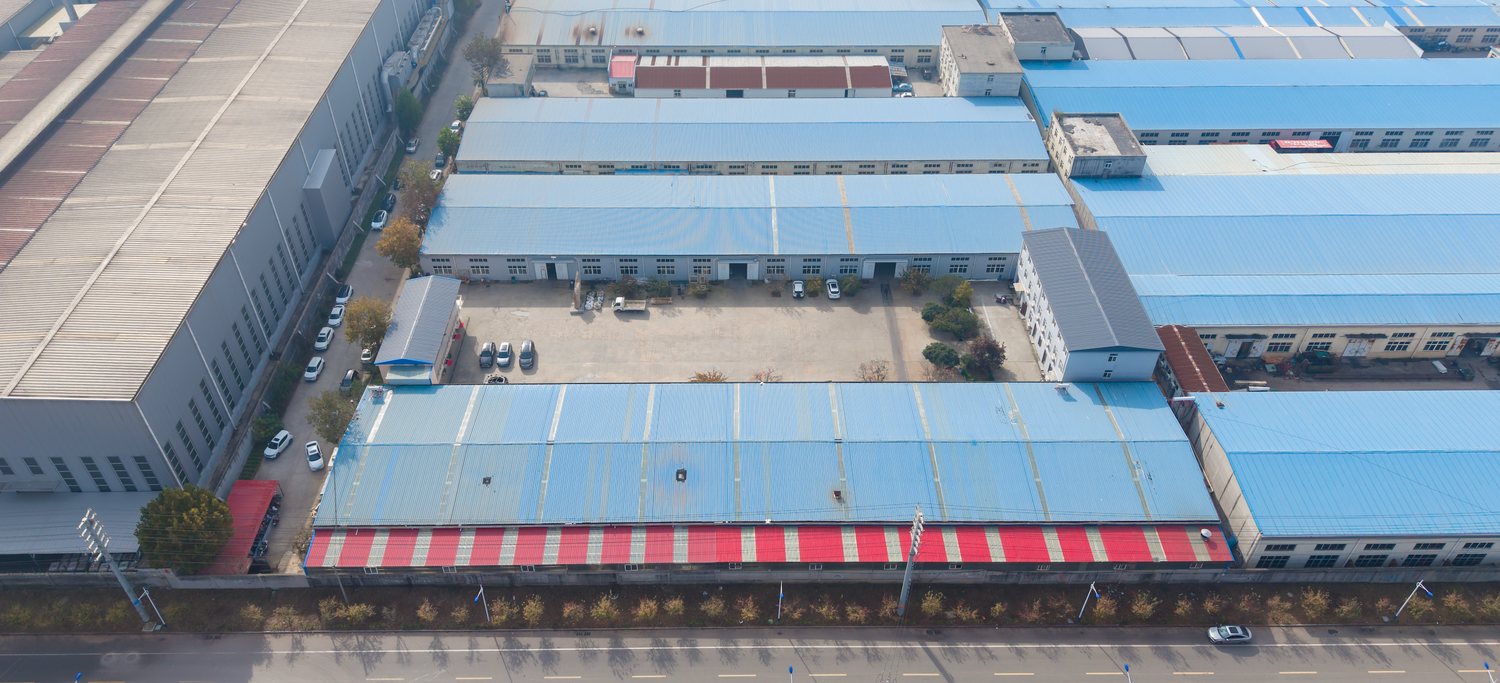
Aerial view of the Jinglitong machining plant in Jimo, Qingdao
Most disappointing outsourcing experiences are rarely caused by a supplier who cannot cut metal. Shops that cannot hold a basic dimension rarely survive long enough to quote overseas customers. Most failures sit at three hand-off points: the drawing sent out, the real capability behind the quotation, and the inspection standard that decides whether a delivered batch passes. When a shoulder callout stays ambiguous, a shop overstates the machines on its route card, or an acceptance rule appears only after parts arrive, a simple turned component can become a missed shipment, a non-conforming lot, or a rework cycle nobody planned for.
This checklist is for buyers who evaluate Chinese CNC suppliers against those three hand-off points rather than against a brochure. It explains what "custom" really means and the six questions that separate a capable shop from a reseller. It then traces how a real order moves from drawing to boxed shipment, which quality documents are routine and which need agreement in advance, where the quoted cost comes from, how long a fair pilot should take, and the signals that mean walking away.
What "Custom" Actually Means
A standard catalog part exists because its maker has already chosen the material, geometry, tolerance band, and finish, and keeps stock in a box. A custom part exists because the buyer has fixed those decisions on a drawing, and the shop's job is to reproduce that drawing repeatably. The line between the two matters in sourcing: a company that only resells off-the-shelf pins or bushings is not a custom manufacturer, even if its website lists CNC machines.
Made to your drawing: geometry, material, surface treatment, and tolerance come from your model, print, or engineering spec; the shop processes, inspects, and documents against that file. Off-the-shelf resale: the shop trades parts it did not design or tool, matching your request to an existing inventory, with little route-card control over material source or finish batch. |
Within our own range, custom work covers turned and milled components such as pin and shaft parts, bushings and sleeves, and plate and bracket components, each produced against the customer's own print rather than a fixed catalog dimension.
Six Questions That Predict Whether a Supplier Can Deliver
Before comparing prices, ask these six in writing. A shop that answers with drawings, process cards and named equipment signals real control. A shop that answers with adjectives and promises signals the opposite.
1. Equipment and process coverage
List the machines that would touch your part: lathes, mills, grinders, sawing, drilling, secondary equipment. Coverage matters more than the count of logos on a tour photo. A long shaft needs turning centers with enough swing and length. A milled bracket needs a machining center with the right axis travel and fixturing, and a bored or ground bore needs finishing equipment on site rather than borrowed from another factory.
At our plant, 40 of the 58 machine sets are CNC, supported by grinders and measuring machines; a route card for each inquiry names the actual equipment that will run the lot rather than a generic machine list.
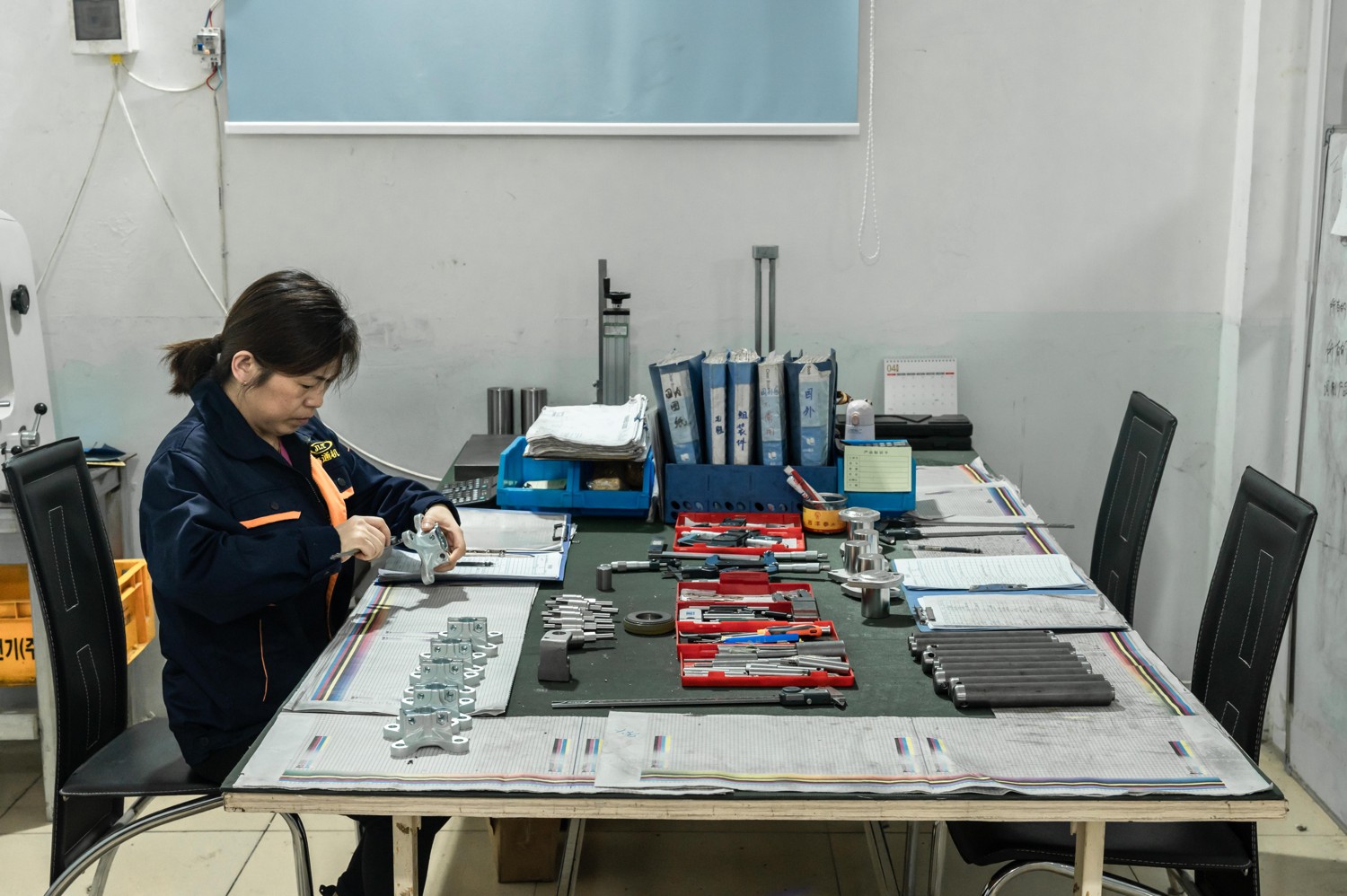
Inspector checking machined components against inspection records
2. Drawing readability and engineering feedback
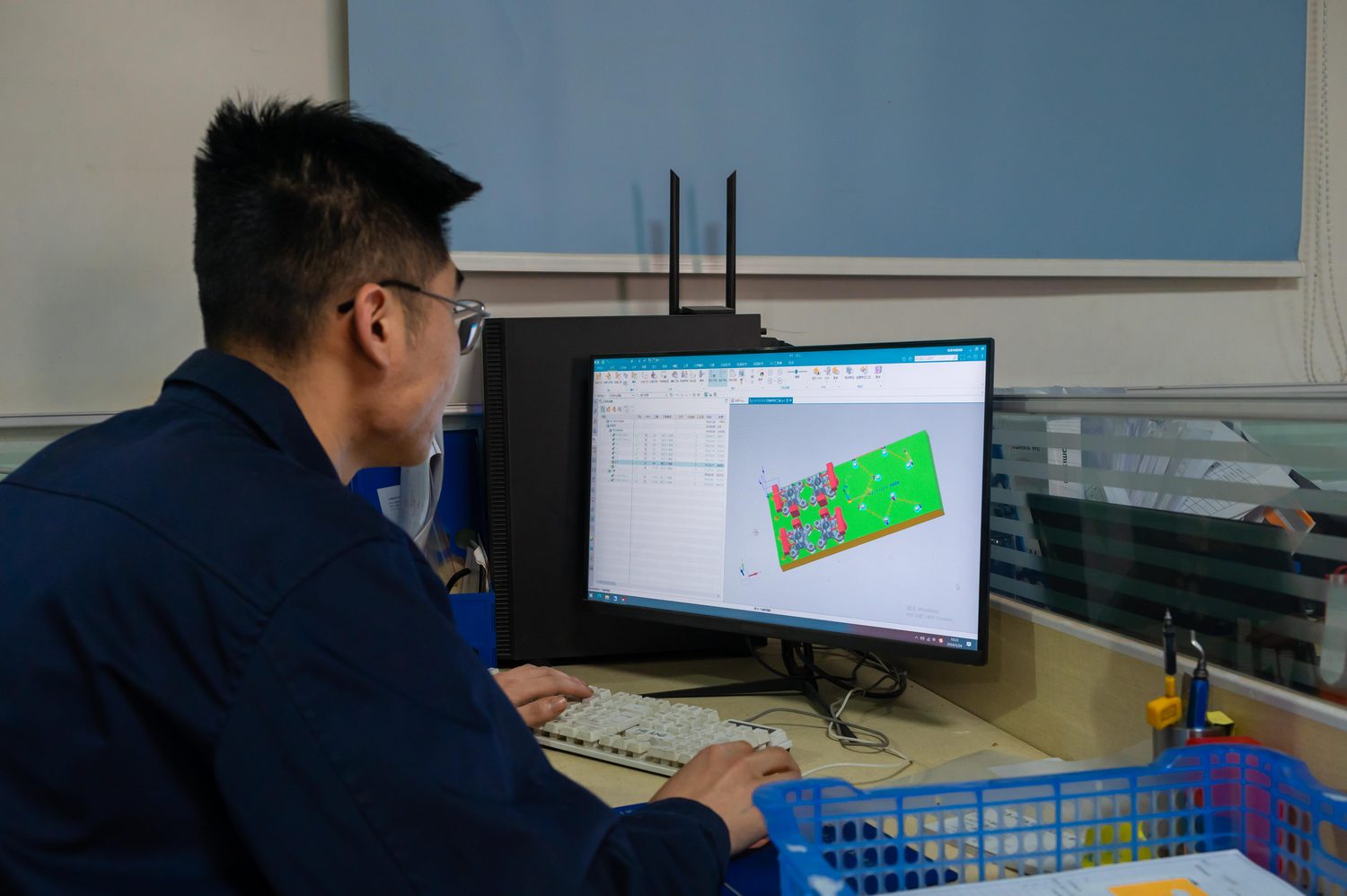
A competent supplier reads the print before quoting. Expect questions about missing datum references, ambiguous fit symbols, unmarked radii, and surface finishes that the drawing does not specify. Feedback that exposes these gaps before steel moves marks an engineering-minded shop. Silence on a dense or incomplete model leaves whoever runs the job to interpret the missing lines.
3. Material source and traceability
Ask which grade bar stock the part will use, and whether a mill certificate accompanies the lot. Traceability links the delivered component back to the raw material batch. That link matters whenever a field failure could be traced to a bad incoming lot. A shop that cannot name its stock source or produce material documentation is higher risk on any part that enters a machine or vehicle.
4. Tolerance and inspection means
Tight dimensions are only as good as the instruments that verify them. Ask how critical diameters, bores, and positions will be measured, and whether a coordinate measuring machine, dedicated gauges, calipers, or micrometers will appear on the inspection record. The inspection method should match the feature: a simple length callout can use a caliper, while a locating bore or a position relationship needs a CMM or a dedicated gauge.
5. Surface treatment: in-house or outside
Plating, black oxide, nickel, and phosphate finishes are often done by a subcontractor even when the machining stays in the same building. The buyer should know this up front: who schedules the finish, who compensates the dimension for coating thickness, and who takes responsibility if the finish lot fails. A shop that keeps plating as a black box between machining and packing has a hand-off it cannot control.
6. How batch consistency is protected
A single good sample proves a setup can work; repeatability proves the process can be held across a production run. Ask how first-article results are recorded, how in-process checks are spaced through the lot, and what triggers a stop when a dimension drifts. Consistent batches come from fixed routes and documented tooling, backed by scheduled checks rather than a skilled operator watching every piece.
Trading Company or Factory? How to Tell the Difference
This distinction decides who actually owns the process and who answers when a lot does not match the drawing. The table below separates the common pattern of a reseller from the common pattern of a maker that runs its own machines.
From Drawing to Part: The Real Sequence
A serious custom order does not begin with cutting. It begins with an engineering review of the file, then a controlled sequence through sample, confirmation, production, inspection, and packing. Each step exists to catch a problem at the cheapest possible moment.
What Quality Documents to Ask For
Documents turn a verbal claim into something traceable after delivery. Not every document is routine for every order; some should be agreed at quotation stage so the shop plans the inspection and paperwork into the run.
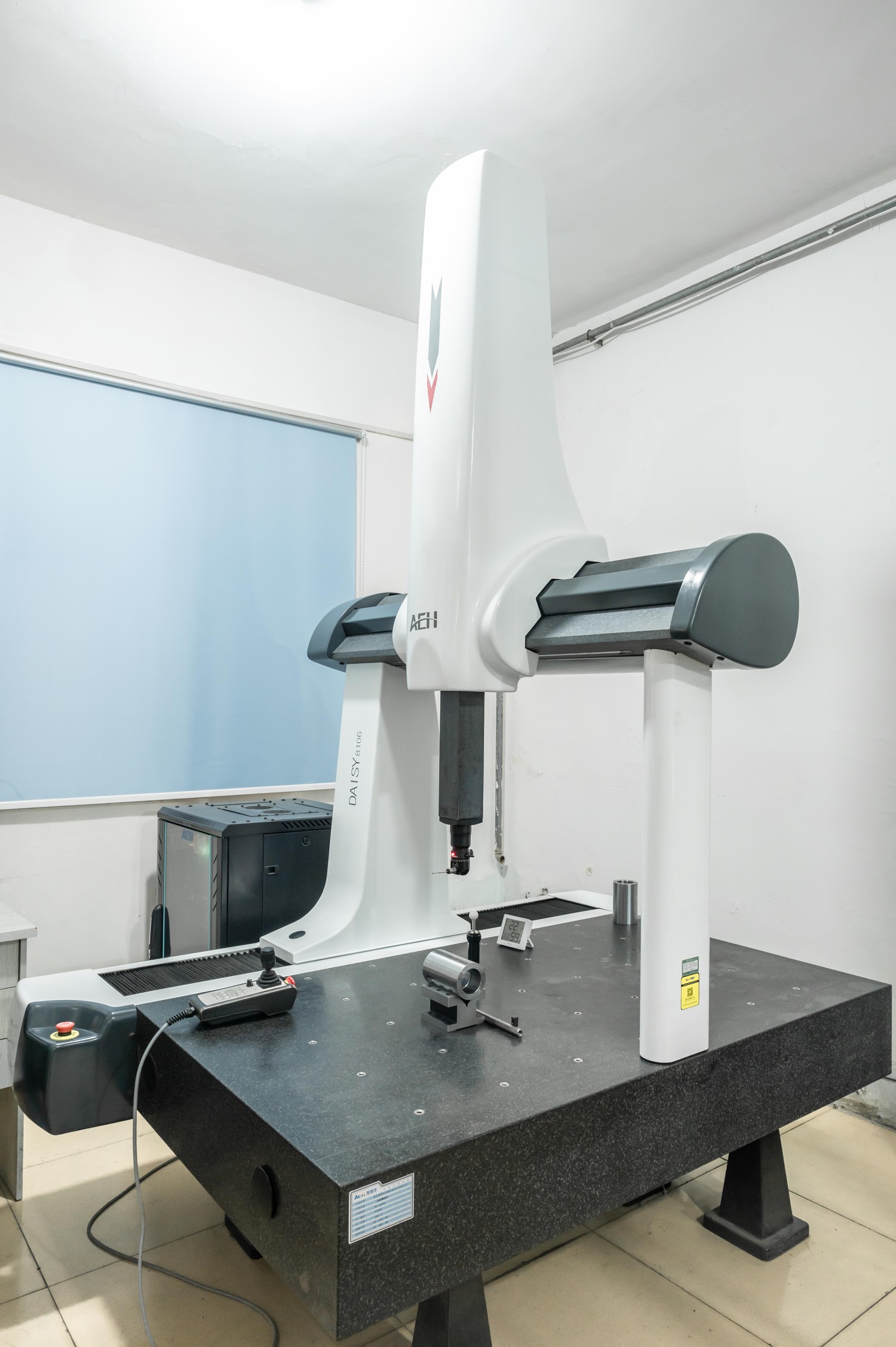
Coordinate measuring machine used for dimensional verification
CMM inspection report
A record of measured critical features, typically for parts with positional or geometric callouts. Common on machined brackets, locating bores, and mating features; ask whether the report covers every inspected piece or a sampled set.
Material certificate (mill cert)
Links the delivered lot to the raw stock grade and batch. Routine on parts where material performance matters; confirm whether the certificate follows the shipment or stays in the supplier's file.
First-article inspection report (FAIR)
A feature-by-feature record of the approved sample. Most valuable on new tooling, first-time geometries, and parts entering a regulated assembly; it should list each drawing characteristic and its measured result.
Certificate of Conformance (COC)
A signed statement that the lot matches the agreed specification. Lightweight compared with a dimensional report, but useful as a packing-side declaration; a COC alone does not prove measured dimensions.
Routine in most orders: basic dimensional checks against the drawing, packing list, and a COC where requested. Agree in advance: full CMM reports per lot, mill certificates shipped with parts, FAIR format, and any special inspection standard your industry requires. These add preparation time and should be on the quotation, not discovered at delivery. |
Where the Money Goes
A low quote hides where cost was saved. These four levers explain how the price of a custom component is built up, without quoting any fixed number: each choice raises or lowers the effort behind the part.
A Fair Pilot Order Timeline
A pilot is a process test, not a rush shipment. The six steps below show what a reasonable first order looks like, and what the buyer should expect at each stage. Actual dates depend on part complexity, finish route, and inspection requirements; these are stages, not fixed calendar promises.
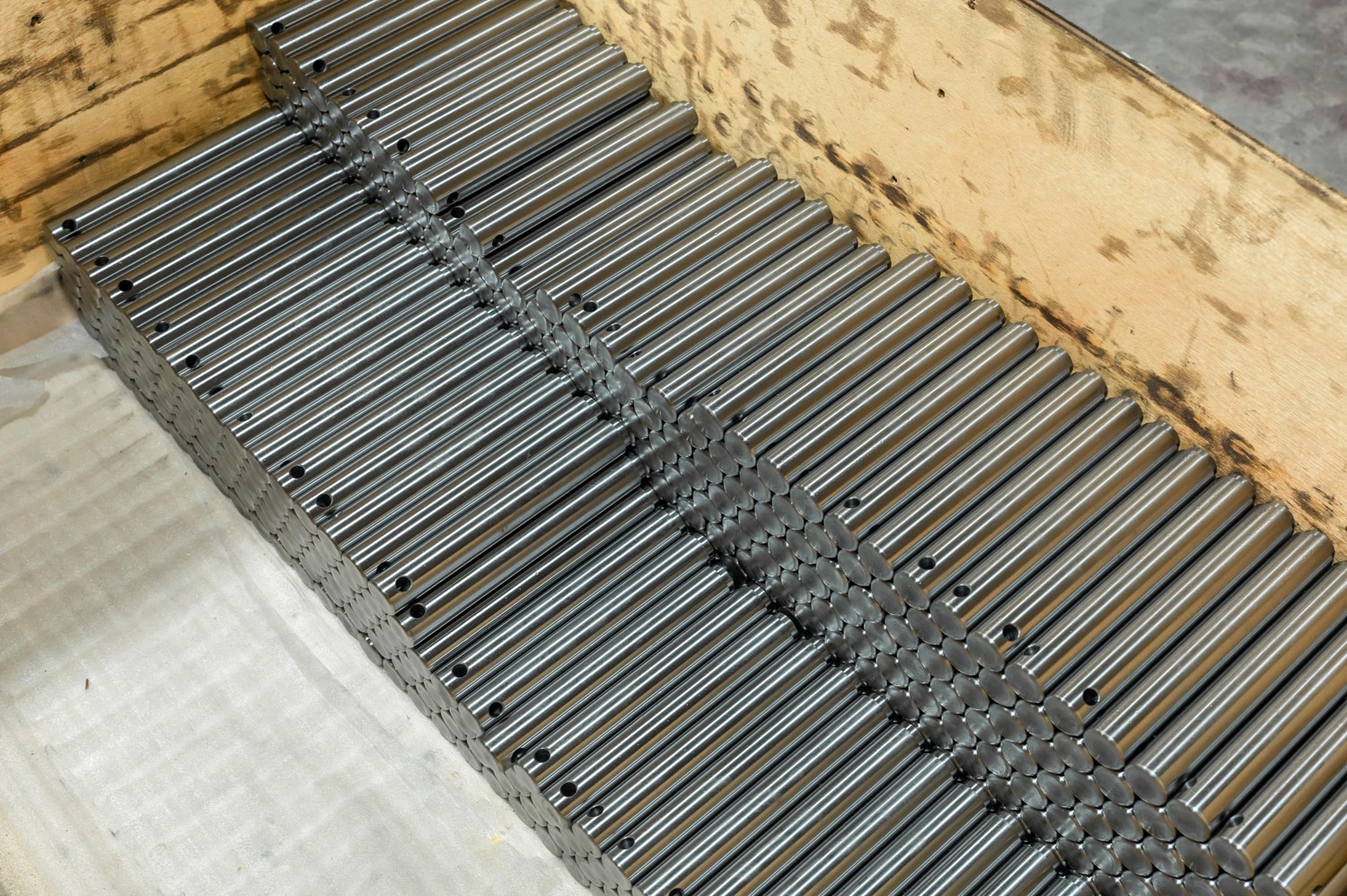
Precision shafts packed for dispatch to overseas buyers
Red Flags Worth Walking Away From
No engineering questions on a complex print. A shop that accepts every dimension, fit, and finish without comment either did not read the file or expects to interpret it on the floor.
Machine list that cannot be matched to your route. Generic claims of "CNC capability" without lathe, mill, grinder, or measuring equipment names leave the actual process unaccountable.
Inspection described only as "checked before shipping." No instrument, no feature list, and no record means acceptance depends on whoever packed the box.
Finish or material source kept vague. Unknown subcontractors, unnamed stock grades, or refusal to share even a summary certificate are weak points on any repeat order.
Promises that skip the sample stage. A supplier that offers straight-to-mass production on a first-time geometry is skipping the cheapest place to catch a setup problem.
Pricing far below the visible effort. When a quote cannot cover material, setup, and checking for the part, the saving usually reappears as rework, missing features, or a failed lot.
FAQ
How do I verify a Chinese CNC supplier before the first order?
Start with the drawing review. A real shop returns questions on datum references, fits, radii and unfinished callouts before it quotes. Ask which machines will touch the part and whether a route card names that equipment. Request the inspection means it will use, plus the material source and any mill certificate attached to a lot. A factory that shares process cards, sample records and inspection documentation reads as far more accountable than one that answers with adjectives. The aim is to separate real process control from a reseller standing between you and a maker.
Should a first order start with a paid sample?
For a first-time geometry or a new supplier, a paid sample is the lower-risk route. It proves the setup, tooling and chosen material before any production commitment, and gives both sides a measured reference for the batch. Agree in advance which features the sample report will cover, how dimensions will be checked, and how any disagreement on the first piece will be handled. A sample is usually a small run on the planned route, not a one-off under special conditions. The sample cost is fixed in the quotation. A shop that promises straight-to-mass production without this stage skips the cheapest place to catch a setup problem.
What tolerance can a Chinese CNC shop realistically hold?
There is no single guaranteed number for every feature. A reachable band depends on part geometry, material hardness, machine type, fixturing, and whether the dimension will be ground or finished after turning or milling. Tighter calls need finer operations, closer checking and more measurement effort per piece, and yield can fall as the band narrows. Send the print and let the shop assess each critical feature against its own equipment, then confirm the band at quotation stage. A CMM, dedicated gauge, caliper or micrometer matches different feature types. Do not rely on a verbal number; record the accepted tolerance and inspection method on the approved sample record.
How long should a pilot order take?
A pilot moves through inquiry and drawing review, a quotation with a named route, a prototype sample, first-article confirmation, a controlled run, then packing and shipment. Calendar time depends on part complexity, finish route, inspection requirements and whether special stock or treatment must be arranged. A simple turned part on standard bar stock usually clears faster than a milled bracket with tight positions and an outside finish. Stages matter more than fixed promises. Expect the review, sample and inspection record to appear in that order, with assumptions written out. Agree target dates at quotation, and treat any post-confirmation dimension change as a new setup decision that can add time.
How can I tell a real factory from a trading company?
A factory names the machines and processes behind the part, answers engineering questions from its own floor staff, and can show inspection equipment and stored process records. It keeps control over route cards, material batches and non-conforming pieces, and carries rework responsibility instead of passing it to another maker. A trading company often quotes from catalogue or existing stock, cannot match a machine list to your route, and leaves finish or material source vague. Factory visits, video walkthroughs, named route-card equipment and a review of quality documents are the practical checks. The clearest signal is who owns the inspection record and who answers when a lot misses the drawing.
For background on the components our plant produces to order, see our precision pins sourcing guide and our precision bushings guide; both walk through the same drawing-to-inspection logic applied to specific part families. If your print is ready, you can contact us with your drawing for a first engineering review.
